
What is a Directory?
When you need to manage customer, employee, and partner identities, you need a modern data store that supports identity attributes. This enables you to deliver unified user profiles and a single source of truth across your enterprise.
How Does a Directory Benefit My Business?
Unified Customer Experience
To build customer loyalty, you’ll need to show your customers that you understand who they are by delivering personalized interactions across in-person and digital channels and giving them the ability to view and manage their own profile.
Keep Identity and Profile Data Safe
Protecting user identity data is one of the most important things you can do for your online business. Unfortunately, it’s also an area that is often overlooked. The best way to keep your user data safe is to use a directory solution that can bring all of your data together, protect it from attacks and encrypt it in every state.
A Single Source of Truth
After you’ve created your master user record, you can choose to decommission legacy data stores to lighten your management load and reduce your attack surface. This will lower IT costs, prevent duplicates and inconsistencies, and decrease the possibility of security breaches.
What Capabilities Does a Ping Directory Offer?
Ping’s directory solution enables you to:
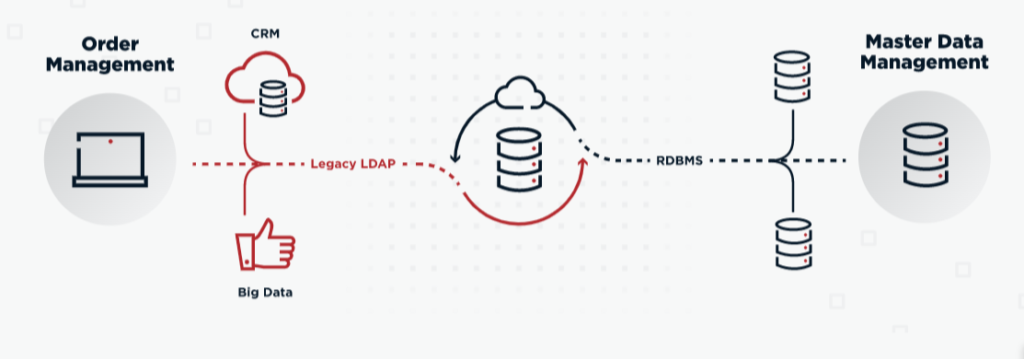
- Bidirectionally synchronize existing data stores, including Microsoft Active Directory, LDAPv3, SCIM 2.0, RDBMS, MDM, CRM and more
- Augment your existing user profiles with structured and unstructured application-specific attributes
- Deliver access to a unified profile through developer-friendly REST APIs
- Optimize load balancing, rate limiting and data transformation with an integrated proxy
How a Modern Directory Works
Flexible Support for Any Application
Most enterprise and legacy on-premise applications access directories using the Lightweight Directory Access Protocol (LDAP). However, cloud or Software-as-a-Service (SaaS) provisioning usually expects Simple Certificate Enrollment Protocol (SCIM) and Representational State Transfer (REST) APIs. A modern directory is both legacy compatible and future-proof.
Faster Time to Market for New Apps and Services
A modern directory offers support for all the ways that apps expect to access directories, as well as the ability to mimic proprietary directory behavior and support flexible JSON schemas.
Extreme Scale, Performance and Availability
A modern directory service is capable of handling millions of entries with sub-millisecond latency and extremely high availability, which is critical for environments where seconds and minutes matter.